
When intimacy feels different, it may be
time to look deeper
Reduced desire, confidence concerns, performance changes, or the feeling that something is off should not be brushed aside too quickly.
Low T Nation starts from your symptoms and guides you to the next step through clinical evaluation, lab work, and personalized medical guidance.

Changes in sexual performance are more common than many people admit
Many patients try to ignore changes in desire, confidence, function, or intimacy. At first, they may seem temporary, but over time they can affect connection, self-image, and quality of life.
If intimacy doesn’t feel the same, it’s a meaningful place to start.
You don’t need the perfect words You do not need the perfect words before taking the next step.
This symptom can show up in more than one way
It is not one moment. It is a shift in desire, function, or confidence
Reduced Desire
Interest in intimacy feels lower, less consistent, or harder to reconnect with.
Confidence Concerns
You may feel more self-conscious, less assured, or more hesitant than before.
Performance Changes
Something about function, consistency, or responsiveness feels different than your normal.
Changed Baseline
You may still be managing day to day, but you know this part of your health no longer feels the same.
Sexual performance concerns do not always point to one issue
Changes in intimacy can overlap with hormones, energy, recovery, phase-of-life changes, or broader health factors. It is not always one symptom. The broader context should be understood before moving forward.
Low T Nation does not treat this as a one-size-fits-all issue. The focus is identifying what may be driving the symptom.
The next step may include symptom review, provider guidance, lab-informed decisions, and a more personalized recommendation.
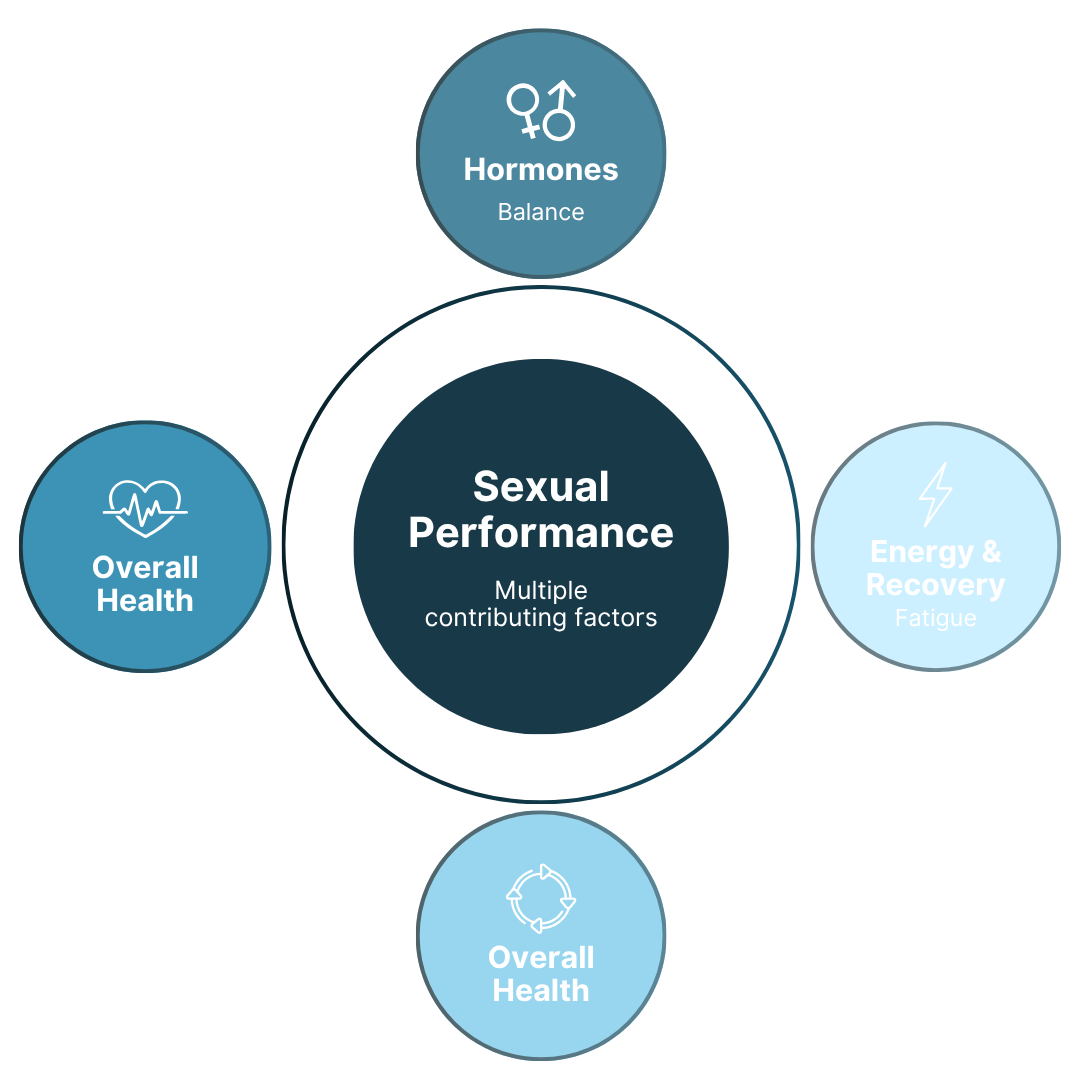
Where the sexual performance route may lead
Depending on what is contributing to the symptom, patients are often guided toward one or more of these care paths.
Sexual Wellness
For men and women dealing with desire, function, confidence, or intimacy-related concerns.
Testosterone Optimization
For patients dealing with low drive, fatigue, body-composition changes, strength decline, or hormone-related concerns that may be affecting intimacy as well.
Women’s Hormone Optimization
For women seeking more clarity and support around hormone balance, energy, metabolism, and phase-of-life changes that may be affecting sexual wellness.
A clearer path from symptoms to a plan
You can begin remotely, without needing to have everything figured out first.
Tell Us What Changed
Share your symptoms through the assessment.
Labs
If needed, we guide you through the lab step so decisions are based on data, not assumptions.
Review
Your results and symptoms are evaluated in the context of real clinical judgment.
Plan
Your next step is matched to what makes sense for you, not a generic template.
Monitor
The goal is not a one-time decision. Ongoing care matters.
Symptoms matter. Clinical context helps clarify
the next move
Changes in sexual performance are real, but the symptom alone does not always explain why they are happening. Clinical review and lab work can help create useful context.
That clarity leads to better decisions and more confident next steps.

Clinician-led · 100% medically owned · Personalized · Lab-guided
This is not a generic intimacy-focused sales funnel
Some people look for quick fixes. Others want something careful, credible, and medically grounded.
Low T Nation is built for patients who want clinician-led care based on symptoms, labs, and medical evaluation.
Not a one-size-fits-all approach, but real guidance delivered through telemedicine.

Questions patients often ask about sexual performance concerns
Do I need to know what is causing this before reaching out?
No. Many patients begin with symptoms, not a diagnosis. The first step is helping determine the most relevant route.
Can sexual performance concerns be connected to hormones?
In some cases, yes. Changes in desire, function, or confidence can overlap with hormone-related concerns, which is why symptom review and, when appropriate, lab work can matter.
Is this page only for men?
No. This route is relevant for men and women dealing with intimacy-related changes that feel different than their normal.
What if I am not sure whether the issue is physical, hormonal, or something else?
That is common. The goal is not to self-diagnose first. The goal is to start with what feels different and move toward a clearer clinical path.
Can I begin remotely?
Yes. Low T Nation is currently positioned as a telemedicine-first care model, so your first step can begin from home.
Can I start with a consultation instead of the assessment?
Yes. If you prefer to speak with the team first, that option should remain easy to access.
You do not have to keep minimizing changes that feel important
Start with the assessment if you want help understanding the most relevant route. Start with a consultation if you would rather talk first. The next step should feel clear, supported, and medically grounded.